)
)
)
REACHING NEW HEIGHTS: HOW SATELLITE CONNECTIVITY TRANSFORMS CRITICAL COMMUNICATIONS
Beyond traditional boundaries
Traditionally, mobile base stations connect to the core network using optical fibre or terrestrial radio links – approaches that remain the standard in many cases. However, as we all know not all emergency responses take place where this infrastructure is available.
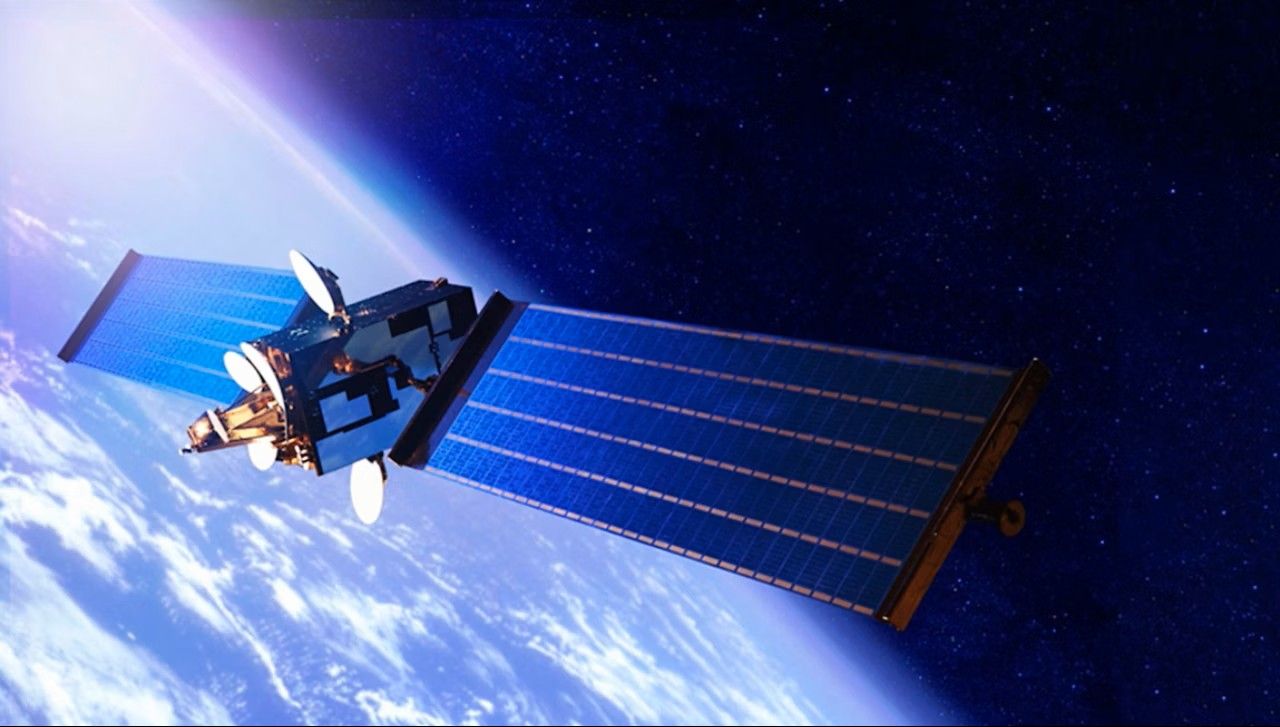
As needs for broader coverage and higher service reliability grows – whether in remote rural areas, isolated coastlines, dense forests, or even heavily built‑up environments where connectivity can be obstructed – satellite connectivity is becoming a key addition to traditional backhaul. It provides an option where conventional solutions are impractical or unavailable, supporting mission critical operations across diverse environments.
Where satellite makes the difference
Satellite connectivity for mobile backhaul is particularly effective in scenarios that demand flexibility and fast response, for example:
Rapid response and disaster recovery
In the event of compromised infrastructure, satellite backhaul enables disaster recovery by restoring connectivity at affected cell sites. It also supports temporary or movable cell sites, such as those needed for major events or mission critical incidents.
Reaching the unreachable
Satellite connectivity now makes it possible to establish permanent cell sites in remote locations where terrestrial backhaul is not viable. This enables reliable rural networks and consistent communication, even in the most challenging environments.
Resilience and speed
Satellite backhaul offers essential backup connectivity to enhance resilience at critical cell sites and enables the rapid deployment of cell sites at new locations whilst awaiting permanent solutions such as fibre.
Tackling technical challenges head-on
While satellite connectivity offers significant benefits, there are important technical challenges to address. BT draws on deep industry expertise to help overcome these complexities to deliver reliable solutions:
Radio path delay: Geo-stationary (GEO) satellites orbit much higher above the Earth than other satellite types (around 36,000 km), which naturally introduces higher latency. To mitigate this, we use Low Earth Orbit (LEO) solutions which operate much closer to the surface (typically 500–1,500 km), resulting in significantly lower delay. This means the user experience is far more responsive and, in many cases, comparable to what you would expect from terrestrial backhaul.
Throughput limitations: Satellite bandwidth and coverage area can limit performance, especially for high‑orbit systems, such as GEO. However, modern frequency‑reuse techniques and adaptive modulation help increase capacity and maintain a stable service.
Atmospheric availability: Weather conditions including rain and snow can impact signal strength, which is why we build sufficient link margin into our network planning. This means designing the system with additional signal strength and adaptive coding, so performance remains stable even in adverse weather.
Transmission Control Protocol (TCP) acceleration: For geo-stationary solutions, we manage the ~0.5-second round-trip time so that data flows smoothly. This helps applications perform normally even when latency is higher.
End-to-end security: Keeping data encrypted across the space segment and terrestrial network adds technical complexity. We manage this with strong end-to-end encryption, secure gateways, and coordinated protection across each part of the transmission path.
The power of available technology
There is growing interest in "Direct to Cell" and "Direct to Device" services from LEO platforms. While these technologies show strong future potential, current offerings remain limited in scope.
We believe in empowering you with technology that works today.
By prioritising proven, available technology, BT has expanded the EE mobile network’s reach - deploying hundreds of satellite-connected cell sites in some of the UK’s most remote locations immediately improving coverage where fibre or terrestrial links cannot currently reach.
This approach delivers immediate, reliable mobile coverage in rural areas, without extra cost to the customer. It supports real-time voice, data, and streaming applications, providing connectivity where and when it is needed.
Security and encryption
Security remains fundamental to satellite connectivity for the emergency services; robust protection is built into every solution.
Internet Protocol Security (IPSec) is used to secure the transport interface, working alongside proprietary encryption from satellite operators and mobile applications. This layered approach supports data integrity and protection throughout the network.
For GEO satellites, the longer radio path requires TCP acceleration to maximise throughput. Managing the encryption domains in the local, space, and ground segments is essential to maintain both speed and security. Conversely LEO satellites, because of their closer proximity to earth, do not require TCP acceleration and can therefore operate using a single encryption domain that runs end to end.
Looking ahead
Satellite backhaul is now playing a key role in advancing critical communications capabilities and supporting greater preparedness across the sector.
From Rapid Response Vehicles in remote areas to permanent hilltop installations, these satellite‑enabled technologies strengthen service continuity and coverage, supporting public safety across even the most challenging locations.