)
)
)
23 Mar 2026
Modernising Essential Critical Communications
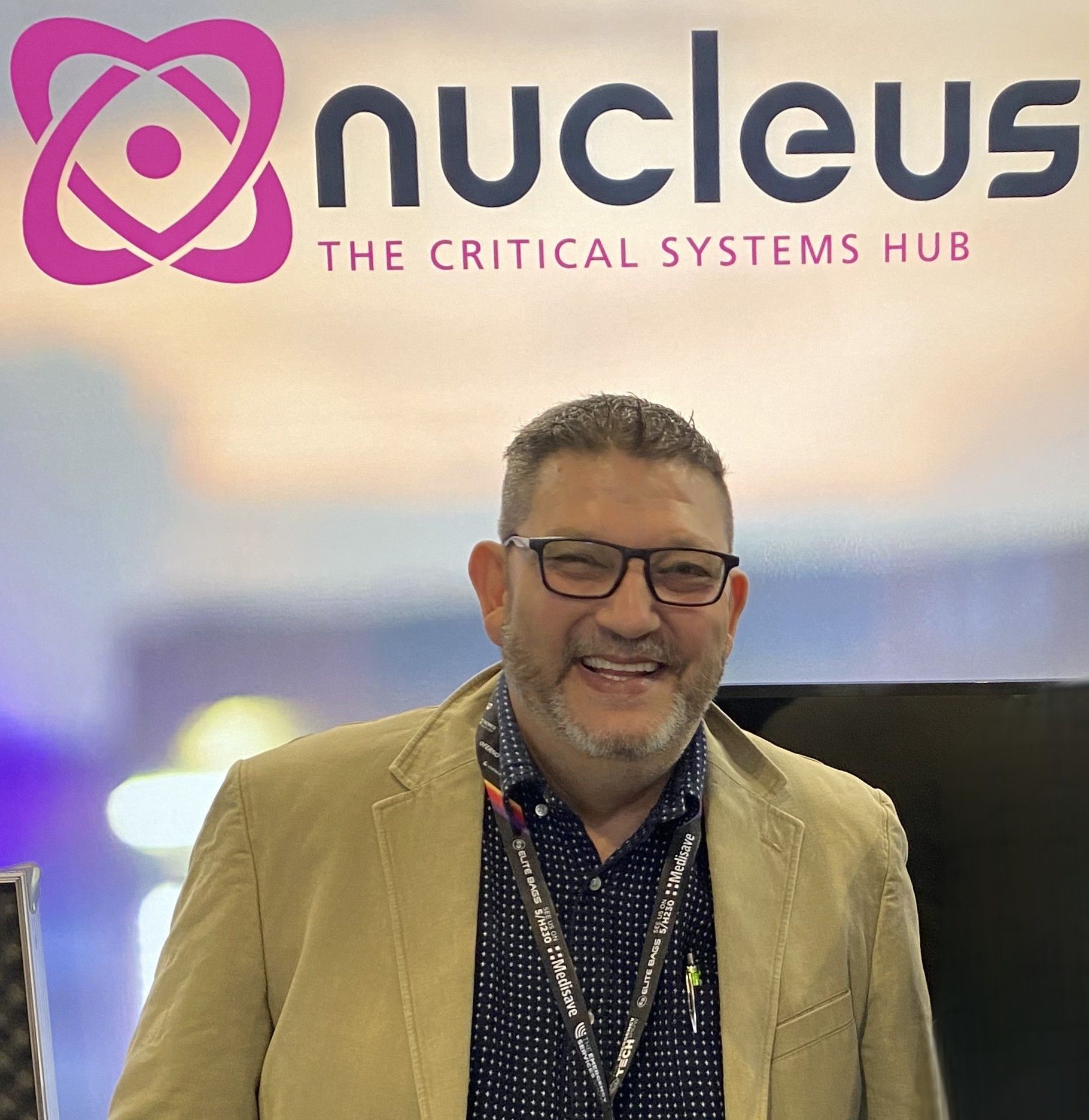
Multitone’s Product Manager Colin Azevedo discusses his new role, highlighting how role-based messaging and NHS compliance are driving safer, more efficient workflows for frontline staff
Colin Azevedo is the Product Manager for Multitone Electronics, a pioneer of wireless messaging and a specialist developer of integrated communication systems for on-site or global usage. Appointed to the role in July 2025, in this interview Colin discusses his first eight months at Multitone; from securing NHS compliance to evolving the Multitone Nucleus™ roadmap toward a predictive, AI-driven ecosystem that balances Multitone’s heritage with modern innovation.
Starting the journey at Multitone
Multitone: Colin, what attracted you to the Multitone Product Manager role?
Colin: I’ve always gravitated towards products that have a real-world impact, and Multitone ticked that box instantly. The idea of working on technology that genuinely keeps people safe – especially in healthcare and critical industries – felt meaningful. When I learned more about Multitone’s legacy and the ambition behind Nucleus, it felt like the perfect blend of established trust and forward-thinking innovation. It’s rare to find a role where you can modernise something essential, not just something convenient.
Multitone: What have been your highlights since joining Multitone?
Colin: It’s been a busy six months, but in the best way! My top highlights so far include getting our NHS DCB – 0129 compliance over the line, which officially establishes us as a trusted software supplier to the NHS, and diving into the Nucleus roadmap to shape its evolution into a fully connected ecosystem. Beyond the technical milestones, working closely with NHS teams and seeing first-hand how they use Nucleus has been invaluable. It instantly grounds my priorities and keeps me focused on the fact that our product is a vital component of much larger, critical systems.
Multitone’s Nucleus platform: solving the problem of fragmented communication
Multitone: Let’s now talk about Multitone Nucleus in more detail. What core problem does Nucleus solve, and how does it redefine critical communication?
Colin: At its heart, Nucleus solves the problem of fragmented communication. Most organisations – especially hospitals – use a patchwork of systems that don’t talk to each other. That slows people down and introduces risk. Nucleus brings everything into one place, ensuring the right message reaches the right person instantly. The fact that we can offer a hybrid solution of paging and new modern apps sets us apart. For modern organisations, that’s game-changing. Instead of chasing people across multiple channels, staff can focus on what they do best, knowing the system works faithfully in the background.
Multitone: Can you tell us about the biggest challenge in designing an ‘always-on’ yet flexible platform?
Colin: The hardest part is balancing reliability with adaptability. On one side, you need a system that never goes down. Lives can depend on it. On the other, every customer has a different mix of legacy equipment, IT policies, and workflows. Building something that can seamlessly integrate with legacy pagers and cutting-edge cloud systems at the same time is a constant engineering and product challenge. But that’s also what makes it exciting. When you get it right, the value is huge.
Multitone: What do you think are the main benefits to NHS staff from the new platform?
Colin: For me, role-based messaging stands out. Frontline staff often change roles, wards, or responsibilities during a shift, and traditional systems don’t account for that. Nucleus does. It ensures that messages follow the role, not the person – so the right person gets the alert automatically, even in the middle of busy handovers.
It sounds simple, but it removes so much friction and reduces delays at moments when every second really matters.
Multitone: How do you think that Nucleus will evolve with AI and growing data demands?
Colin: AI gives us an opportunity to move from reactive communication to predictive and intelligent workflows. Over the next few years, I see Nucleus becoming more proactive – spotting patterns, anticipating needs, and offering decision support.
Whether that’s predicting escalation paths, highlighting risks, or automating routine communication, the ecosystem will evolve to help organisations work smarter and safer without overwhelming users.
Multitone: decades of trust – and an appetite for modernisation
Multitone: Please tell us why you believe that Multitone is such a great place to work?
Colin: I’d have to say firstly, it’s the people with whom I work with. There’s such a real depth of knowledge here and everyone is genuinely committed to supporting customers.
As a second point, I would mention our company mission. Working on technology that matters – ultimately saving lives – is an extremely strong motivator.
Finally, the balance between heritage and innovation. Multitone has decades of trust behind it, but there’s also a real appetite for modernisation with exciting new products like Nucleus – with more in the pipeline!
Multitone: Why do you think that so many people stay so long at Multitone?
Colin: In my view, it comes down to loyalty, purpose, and community. People feel connected to the products and the customers we serve, and that sense of responsibility keeps them engaged. Plus, Multitone has a very family-like culture – supportive, collaborative, and stable. It’s the kind of environment where people build careers, not just take jobs.
Multitone: Which Multitone solution excites you most – and why?
Colin: It has to be Nucleus, although I’m slightly biased! It’s exciting because it’s not just a product – it’s a platform. The more we add to it, the more value it creates. Watching how it evolves and connects with different solutions across the organisation is incredibly rewarding.
The future of compliance: data-driven dependency
Multitone: What changes do you see coming in compliance for critical communications?
Colin: Compliance is going to become more data-driven and evidence-based. Organisations will increasingly require proof that their systems have delivered, acknowledged, and prompted action on messages within defined timeframes. There’s also a rising expectation for systems to be secure, auditable, and fully traceable, especially as cyber risks grow. I expect tighter standards around interoperability and resilience too. Systems will need to demonstrate they can stay operational under pressure and integrate cleanly with national or regional digital strategies. Keeping all information and communications flow transparent and open is the way we will stay valued and be number one in the communications market.
Thank you Colin for such an interesting and informative perspective. Good luck with the BAPCO exhibition this month.
Peter Lomax, Multitone’s Sales and Marketing Director, said: “Technology is only as effective as both the strategy – and the people – behind it. Colin Azevedo is an excellent addition to the Multitone team, bringing product insight, proven experience and a passion for innovative solutions. We are delighted to have Colin on board.”