)
)
)
-
Speakers
-
In January 2025, Washington D.C. faced an extraordinary convergence of high-pressure events: a presidential inauguration, a state funeral, and a helicopter and airplane crash. Heather McGaffin, Director at the Office of Unified Communications (OUC), will share how her team managed these overlapping crises, the operational and communications challenges that emerged, and the lessons learned for public safety agencies navigating simultaneous, high-stakes incidents.


-
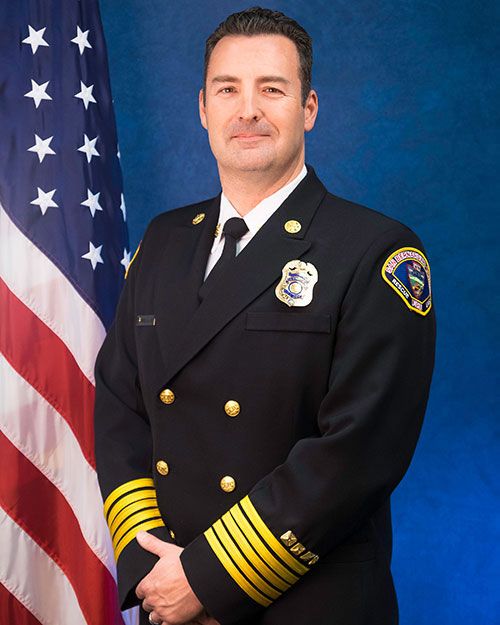
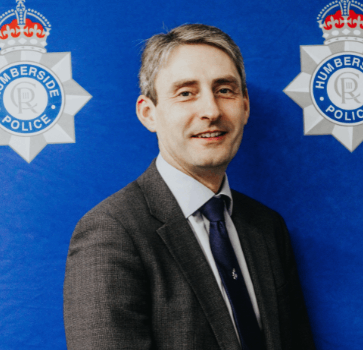
Edward Preece, Chief Executive Officer of the Police Digital Service, will outline how national digital leadership is helping policing and industry work together more effectively in the public interest.
Grounded in the National Police Chiefs’ Council Digital Strategy, the speech will focus on the core capabilities of the Police Digital Service and how they support consistent, interoperable technology and data services across policing. Edward will explain how these capabilities set clear standards, reduce fragmentation and enable forces and suppliers to design solutions that work seamlessly together.
The talk will highlight how the Police Digital Service provides assurance, guidance and shared services that empower collaboration, improve efficiency and support frontline policing. By strengthening how digital, data and technology services operate across forces, these capabilities help officers and staff prevent harm, respond more effectively and keep communities safe.
The session will demonstrate how national collaboration, underpinned by strong digital capability, leads to better outcomes for the public and greater confidence in modern policing.


-
Artificial Intelligence and cloud-native technologies are no longer futuristic upgrades; they are essential for emergency call centers/control rooms looking to stay effective in today’s public safety communication landscape. However, transitioning to these technologies introduces new challenges, from ensuring seamless integration to managing cost, risk, and cultural shifts. This panel dives deep into the customer perspective to examine how emergency centers are successfully transforming their technology stack to be AI-supplemented and cloud-native. Bringing together industry leaders and customers who have navigated this transition, the session will uncover lessons learned, smart strategies, pitfalls to avoid, and insights for scaling modern solutions.


-
Speakers

-
The space sector and Non-Terrestrial Networks (NTN) are advancing at remarkable speed, redefining what is possible for connectivity. This session will explore the latest developments in space-based communications- particularly LEO mega-constellations - and how they can transform user experience and unlock new applications. We will examine LEO-enabled mobile backhaul, sharing real-world insights from testing and deploying solutions that support live mobile services, including MC-PTT.
The discussion will also cover emerging capabilities in LEO and airborne communications and how they integrate into future hybrid terrestrial–non-terrestrial networks. Finally, we will provide a realistic assessment of direct-to-device technology and what lies ahead, highlighting how these innovations could strengthen terrestrial networks and build a more resilient, mission-critical communications ecosystem.

-
Lost assets in public safety are a costly problem, impacting budgets and frontline readiness. This session explores how RFID technology offers a powerful solution. We'll show how RFID can track critical equipment, from evidence to medical devices, creating a reliable digital chain of custody. Learn how an RFID strategy enhances accountability, automates inventory, reduces costs, and ultimately increases officer and public safety. This is a practical guide for protecting assets and optimising operations.
-
As organisations across public safety, emergency services, and government modernise their critical communications infrastructure, understanding the full scope of migration from devices to processes is essential. This session offers strategic guidance that goes beyond technical deployment, addressing operational readiness, risk mitigation, and long-term resilience. It will unpack common challenges around new devices and evolving digital workflows, providing structured steps to maintain service continuity and align technology with mission-critical objectives. Attendees will learn how to assess and improve post-deployment processes, plan future migration stages, and evaluate success beyond technical performance. The session ultimately promotes a more strategic, process-driven approach to migration that strengthens organisational effectiveness and resilience.


-
This plenary session will focus on the human factor within emergency services. How the inherent challenges of work in emergency services collide with basic human needs will be discussed. Individual and organizational prevention efforts that may be implemented to enhance wellness and resilience will be described.
Speakers

-
“In practice, we’re never more than one second away from experiencing the worst we can.”
We present operational experience with Sharpi - an on-prem, real-time audio enhancement that clarifies speech while attenuating wind, traffic, and crowd noise, purpose-built for control rooms. Powered by state-of-the-art AI audio methods, it supports the human brain in doing its job - delivering higher-quality call-taking and better well-being.
The reality for 112 call-takers: persistent - and often unreasonable - strain. They juggle multiple tasks while handling chaotic caller audio, distressing content, and continuous decision pressure, driving fatigue, errors, and complaints. From an HR perspective, protecting mental health is essential. Significant effort already goes into supportive psychological environments and better tools; Sharpi strengthens that toolkit.
The “Inda” case, Iceland: clarity enabled faster assessment and a helicopter launch ~45 minutes earlier. A colleague - initially reluctant to adopting new technology - called it “blessed technology,” because it measurably helps both citizens and call-takers. And Inda is not alone: across European PSAP evaluations, call-takers report easier conversations, greater work tranquillity, and less fatigue - consistent with reduced cognitive load and more confident decisions.
Clearer audio is not a luxury; it’s a mental-health intervention that sustains performance and workforce well-being in the most demanding public-safety settings

-
Developed for policing, by policing, Oscar Kilo, the National Police Wellbeing Service (NPWS) offer evidence-based, sector-specific support that's tailored to the unique challenges faced by all police personal. NPWS provide national solutions that help forces deliver consistent, cost-effective wellbeing support, offering direct access to help, guidance, and support for everyone connected to policing.
The presentation will outline what we do and how we do it through our workstreams


-
The wellbeing of 112/999 telecommunicators is increasingly recognized as a critical factor in staff retention, performance, and service quality. While attention has been given to supporting personnel, less focus has been placed on how wellbeing is addressed during initial training. This presentation argues that preparation for the psychological and physiological demands of emergency communications must begin on day one.
Drawing on experience with training at 112 in Iceland, the presentation explores common reasons why telecommunicators leave emergency communication centers and how these factors can be proactively addressed through initial training. Alongside technical skills and SOP’s, new telecommunicators must be trained in areas such as sleep management, nutrition, resilience, stress awareness and work–life balance.
By normalizing these topics early in training, organizations can better prepare telecommunicators for the realities of the role and foster a healthier and more sustainable workforce. The presentation offers practical perspectives on how wellbeing can be embedded into training programs without compromising operational readiness.
-
Find out about how a centralised police procurement approach will enable policing to buy once, buy well and buy better reducing inefficiency, ensuring consistency and driving a step change in the relationship between policing and its supplier partners.

-
UK policing is piloting AI across many areas, but most projects fail to progress beyond proof-of-concept. The challenge is scaling AI safely while maintaining trust, compliance and operational control. Our approach addresses this in two ways: a regulated-industry platform that provides robust governance for developing and evaluating AI agents, and Nexus - our in-house Power App that embeds those agents directly into everyday workflows to drive real adoption.
The programme focuses on three AI agents: a Policy Agent for rapid interpretation of guidance, an Investigation Review Agent to assess case file completeness, and a Missing Persons Agent to support decision-making. Each is evaluated against strict criteria for accuracy, relevance, data quality and policy alignment, using AI-on-AI assessment tools and structured user feedback for continuous improvement.
Nexus provides a simple, familiar interface that makes AI accessible to officers and staff without disrupting operational processes. Early results from a comparable HR agent show strong benefits - 42% workload reduction, 74% faster response times and improved satisfaction - while also highlighting risks such as data quality issues and hallucinations that the evaluation framework is designed to identify and mitigate.
Together, this governance-plus-access model offers a scalable, safe and practical route for policing to move beyond pilots and deliver real operational value from AI.

-
Mobility has been with most UK police forces now for so long that its availability has become an assumed feature of officer's essential kit. While this may be the case there has not been any work undertaken to ascertain how this now embedded feature of policing has developed over time, and what returns it provides. Dr. Martin Gallagher and Dr. William Graham, both former Scottish police officers, have embarked on an innovative research project on behalf of Motorola Solutions to address these questions. They have met with operational officers from across the country to understand how the technology is really being used on a day-to-day basis, what works well and perhaps most importantly what can be improved
-
A year on from the signings of the Mobile Services and User Services contracts, John Black, the Programme Director for the Emergency Services Mobile Communication Programme (ESMCP), will detail the progress that has been made and the next steps being undertaken to deliver ESN. This session will also include updates from Faisal Mahomed at BT/EE and Steve Kelly at IBM on what they are delivering as partners on the ESN Programme.